
Why Does My Heel Hurt When I First Get Out of Bed?
When you stretch your legs out of bed and stand up, you might feel a sharp, stabbing pain in the bottom of
your heel.
This pain may subside after a few minutes of walking around, but it can return after sitting at your desk or getting out of a car. If this sounds familiar, you are not alone. Morning heel pain is one of the most common reasons people visit our office in Denton, TX, and the most common cause is a condition called plantar fasciitis. The good news is that most people find relief without surgery, especially if treatment starts early.
The Most Common Cause of Heel Pain: Plantar Fasciitis
The plantar fascia is a thick band of tissue that runs along the bottom of the foot.
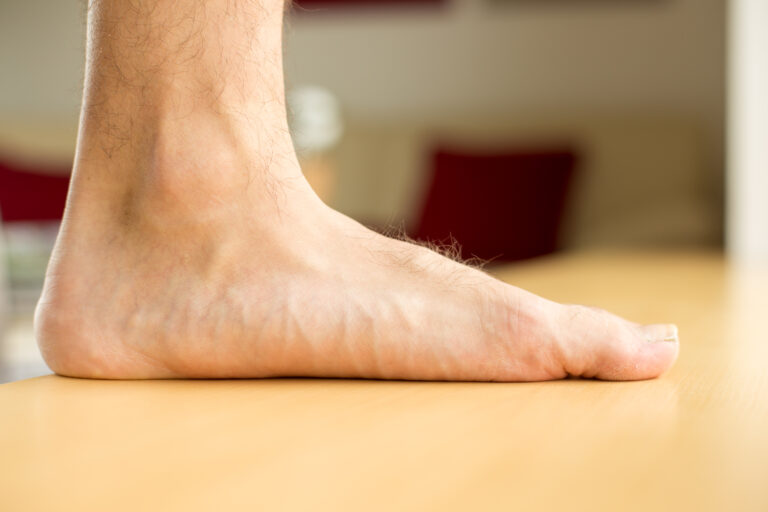
It has three main parts, with the central part doing most of the work. Imagine it as a spring that helps lift the foot into an arch as you walk. Without this fascia, the foot would lose its shape and flatten out, like a pancake.
What happens is quite simple. The band becomes overworked, gets irritated where it attaches to the heel, and that irritation is called plantar fasciitis. During the night, the foot heals and tightens up. When you stand on it in the morning, you stretch tissue that has tightened, causing the sharp pain with your first steps. Once you start moving, the pain usually eases as the tissue warms up. If you sit still for a while, the same thing happens again
Things that Raise the Risk:
- Spending long hours standing or walking on hard surfaces
- Wearing shoes with poor support or walking barefoot on tile and hardwood floors
- Having tight calf muscles or a tight Achilles tendon
- Having low arches, flat feet, or very flexible feet
- Suddenly increasing walking, running, or physical activity
- Weight gain, pregnancy, or hormonal changes, all of which put more pressure on the heel
Other Causes of Heel Pain in the Morning
Plantar fasciitis is the usual cause of this type of pain in the bottom of the heel.
However, it is not the only possible cause.
Heel spurs are often blamed. In most cases, the spur is a symptom, not the main cause. The bone reacts to long-term pressure, and a spur typically forms after the fascia has been tight and overused for a while. Treating the spur itself is rarely helpful. Only in rare cases is the spur the main issue causing the pain.
Nerve pain can also cause heel pain. This may come from an irritated nerve near the foot or from a nerve issue higher up, such as in the back.
As we age, the fat pad under the heel can thin, causing a deep, bruise-like ache rather than a sharp pain with the first steps. These conditions are treated differently, so if the pain does not act like typical plantar fasciitis, it’s worth getting a professional opinion.
Back pain can also be a factor. Sometimes, pinched nerves can only be felt in the feet, with pain coming from the heel. In such cases, a check-up for the back may be necessary.
What You Can Do at Home:
If your heel pain is mild and recent, the following steps may help:
1. Stretch before you stand. While still lying in bed, loop a towel around the ball of your foot and gently pull your toes toward you for 30 seconds. Repeat this three times on each foot.
2. Wear supportive shoes, even at home. Avoid walking barefoot on hard floors. Keep a pair of supportive sandals or shoes near the bed.
3. Roll and ice the arch. Roll your foot over a frozen water bottle for 10 to 15 minutes in the evening.
4. Stretch your calves. Lean against a wall with one leg back and the heel on the floor. Hold this position for 30 seconds, several times a day.
5. Reduce high-impact activities. Swap running or long walks with cycling or swimming for a few weeks.
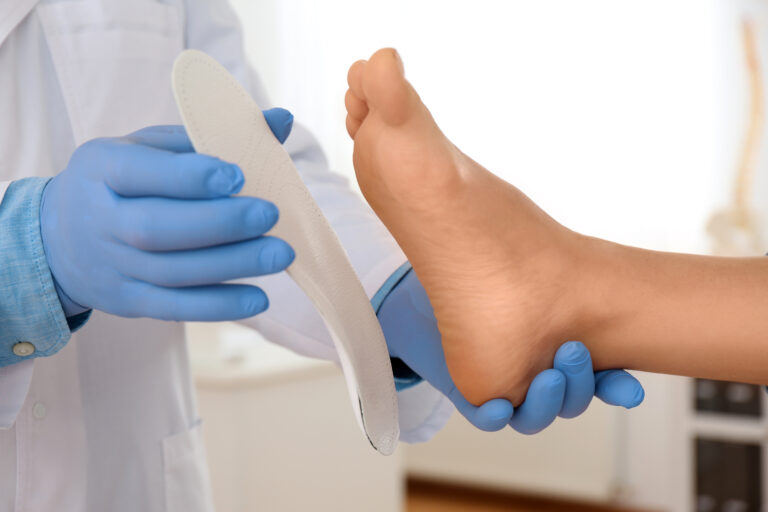
6. Consider over-the-counter arch supports. A good insert can relieve pressure on the fascia. Custom orthotics may be an option if store-bought inserts do not provide enough support.
When to See a Podiatrist?
Make an appointment if:
- Your heel pain has not improved after two to three weeks of home care
- The pain is getting worse or it hurts even when you are resting
- You notice swelling, redness, bruising, or warmth in the heel
- You feel numbness, tingling, or burning in your foot
- You cannot put weight on your foot or walk normally
- You have diabetes or poor circulation.
Any foot pain should be checked promptly.
The longer plantar fasciitis goes untreated, the longer it usually takes to heal, so it is better to come in early
rather than waiting months.
How Dr. Barber Treats Heel Pain in Denton
Dr. Barber begins by looking at your foot, how you walk, and the shoes you actually wear. If the bone needs to be examined, an X-ray can rule out a stress fracture or another bone issue. Treatment starts with the least invasive option that is effective. Depending on the exam, this can include: A stretching and strengthening plan tailored for your foot.
Shoe changes and support, starting with over-the-counter options, and custom orthotics if those don’t provide enough relief. A referral for hands-on treatment. Many of these cases are referred to Airrosti, and to physical therapy when that is the better fit. Airrosti offers focused soft-tissue treatment and a home care plan, which works well with what is done in the office. Use of anti-inflammatory gel or oral anti-inflammatory medication, when appropriate. A targeted injection if the pain is severe and the simpler steps are not enough. Needling the fascia (fenestrating or “swiss cheese” the tissue) A minimally invasive procedure, with small incisions, for the few cases that do not respond to conservative care.
Most people do not need the procedure. Almost all of these cases resolve without surgery.
To date, every patient to our knowledge at Denton Podiatry has been able to…
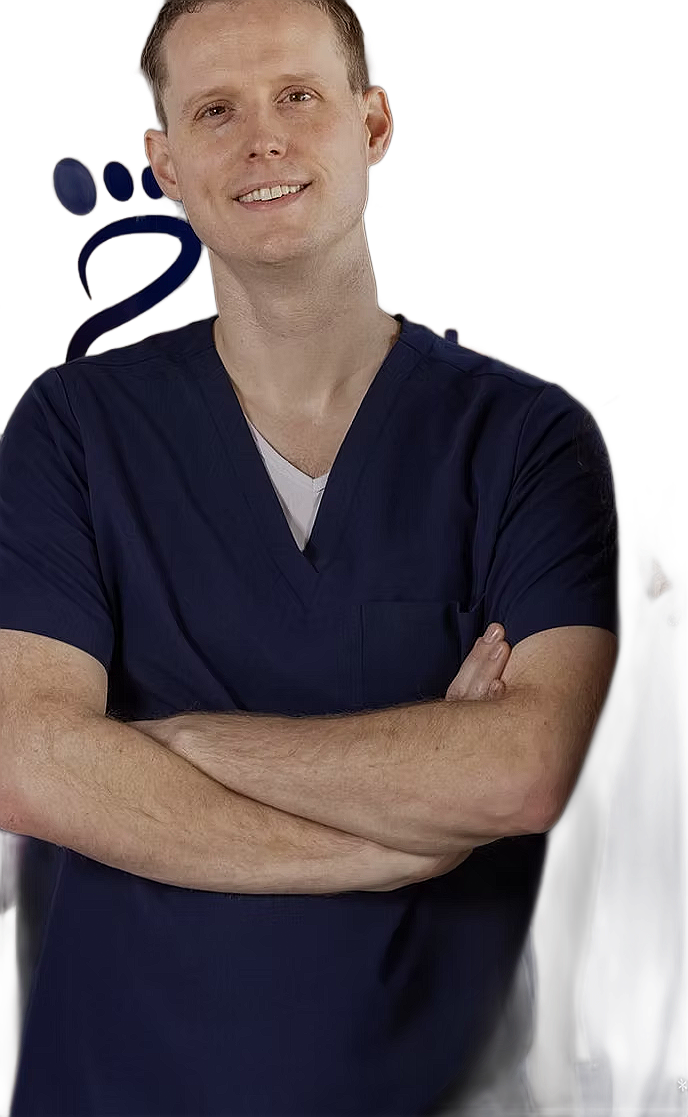
Dr. David J. Barber, DPM
Dr. David J. Barber is a board-certified podiatrist (American Board of Podiatric Medicine) and the owner of Denton Podiatry in Denton, Texas. After training in surgery for three years in Brooklyn, New York — including advanced wound care and limb preservation under nationally recognized specialists — he brought that expertise home to North Texas. Dr. Barber is known for honest, evidence-based care, treating everything from everyday heel and nail problems to bunions, minimally invasive foot surgery, and complex, hard-to-heal wounds — including in-home mobile wound care across Denton County and Cooke County.